
'The reason why they rushed through the bill was they wanted to avoid using the 2026 Census because the 2026 Census by their own decision will be a caste census.' 'The BJP knows that a significant share of the OBCs who will get captured in the census, for the first time after the 1931 Census, are against the BJP. Only a segment of the OBCs are in their favour.' 'So they wanted to avoid the OBC reservation among women, which is a demand of a lot of Opposition parties.'

The Indian government is reportedly developing new proposals to increase Lok Sabha seats by 50 per cent across all states. This initiative aims to address concerns from southern states regarding potential political power reduction due to population-based delimitation, while also facilitating the operationalisation of the women's quota law before the 2029 Lok Sabha elections.

The Monsoon session of Parliament saw the passage of several key bills in both the Lok Sabha and Rajya Sabha, despite repeated disruptions and adjournments.

In a swift political counter-offensive, the Bharatiya Janata Party and its National Democratic Alliance (NDA) partners have announced a massive, nationwide protest campaign targeting the Opposition.

Tamil Nadu Chief Minister M K Stalin has claimed victory for the state after the Constitution Amendment Bill was defeated in the Lok Sabha. Stalin criticised the Centre's handling of the Women's Reservation Bill and delimitation process, accusing the BJP of prioritising political gain over fairness and consultation.
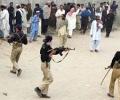
Pakistan's parliament on Tuesday overwhelmingly passed two key bills aimed at setting up military courts for the speedy trial of "hardcore terrorists" in the aftermath of the Peshawar school massacre by Taliban.

The Bill which stipulates up to two year jail term and a maximum fine of Rs 5 lakh for discriminating against differently-abled persons.

The Women's Reservation Act 2023, mandating 33 per cent quota for women in legislatures, has been enacted, but its immediate implementation is unclear due to ongoing parliamentary debates and delimitation requirements.

A rebellion within the Trinamool Congress is expected to significantly increase the NDA's numbers in both the Rajya Sabha and Lok Sabha, bringing the ruling alliance closer to a two-thirds majority needed for constitutional amendments. This shift is driven by upcoming Rajya Sabha elections, TMC MP resignations, and potential support from defecting TMC Lok Sabha members.

Police forces from several adjoining districts were requisitioned to man key junctions, sensitive locations and government buildings in the Lutyens' area ahead of the march.

Lok Sabha adjourned sine die, marking the end of the 19-day Winter Session. Key bills were passed, including one opening the civil nuclear sector to private companies and another replacing MNREGA.

Parliamentary Affairs Minister Kiren Rijiju indicated that the government may bring a bill to increase seats in the Lok Sabha, potentially to implement reservation for women in the legislature. The Opposition has raised concerns about the timing and implications of the proposed bills.

Opposition MPs and transgender rights activists are urging the withdrawal of the Transgender Persons (Protection of Rights) Amendment Bill, 2026, citing concerns that the proposed changes could weaken the rights of transgender individuals.
Opposition MPs and transgender rights activists are calling for the withdrawal of the Transgender Persons (Protection of Rights) Amendment Bill, 2026, citing concerns that the proposed changes could dilute the rights of transgender individuals.
The bill, aimed at easing the existing legislation on rape, which was part of the Hudood Ordinance brought in by former military ruler Zia-ul-Haq, will become law after getting assent from Musharraf, who pressed for its approval.

It makes it mandatory for companies to spend on social welfare and seeks to bring in greater transparency.

The Centre has notified the implementation of the Women's Reservation Act 2023, providing a 33 per cent quota for women in legislatures, Jammu and Kashmir, and Union Territories, with the provisions set to come into force on April 17, 2026.
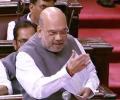
Opposition parties slammed the amendment, saying the new law was "draconian" and could be misused against anyone opposed to the ruling establishment.
Larger NGOs could no longer work with smaller ones, especially those organisations working on the ground that had no means of or expertise in raising money themselves, reveals Aakar Patel.

Sports Minister Mansukh Mandaviya said the Sports Bill is a key reform aimed at building a "transparent, accountable and world-class sports ecosystem" in India.

The Bill allows stopping of transmission and intercepting messages in case of public emergency, in the interest of the public, to prevent incitement for committing offence.

The Congress party has accused the government of scheduling a 'special session' to pass bills related to women's quota and delimitation with the intention of gaining political advantage in the upcoming West Bengal and Tamil Nadu elections, calling it a violation of the model code of conduct.

Prime Minister Narendra Modi will address the nation tonight at 8.30 PM, a day after a bill to implement women's reservation in legislatures was defeated in the Lok Sabha.

'Lakhs of transgender people's identities will get erased. Many of them will go into hiding and lead depressing lives.'

The BJP and opposition parties are engaged in a political battle over the implementation of the Women's Reservation Act, with the BJP defending it as historic and the opposition accusing the government of delaying its notification and using it to push an unconstitutional delimitation exercise.
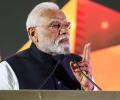
Prime Minister Narendra Modi hailed the passage of the Waqf (Amendment) Bill in Parliament as a "watershed moment" in the country's quest for socio-economic justice, transparency and inclusive growth. He said the legislation will particularly help those who have long remained on the margins, thus being denied both voice and opportunity. Modi stated that the Waqf system was synonymous with lack of transparency and accountability, especially harming Muslim women, poor Muslims and Pasmanda Muslims. He added that the legislation will boost transparency and safeguard people's rights, ushering in a more modern and socially just framework. The prime minister thanked all members of Parliament and the public for their contributions to the legislation.

Several opposition parties on Wednesday decided to jointly oppose the delimitation provisions in the Constitution amendment bill in Parliament, even as they reiterated support for women's reservation, with Mallikarjun Kharge alleging the move is politically motivated.

Congress general secretary Jairam Ramesh has alleged that the BJP's "real and ultimate target" in seeking a two-thirds majority in the Lok Sabha is to amend the Constitution to end reservation, rather than genuinely implement women's reservation.

Congress leader Rahul Gandhi, who made "number 16" jibe at the treasury benches during his speech in Lok Sabha on Friday on three new bills, refused to elaborate on it in his brief interaction with reporters and said "it is a puzzle" and he "won't tell the answer just like that".

Prime Minister Narendra Modi appealed to Lok Sabha members to vote for the women's reservation bill, emphasising the need to empower women and rectify decades of political inaction.

Hours after the Waqf (Amendment) Bill was passed in Parliament, 50 individuals embroiled in land disputes in Kerala's Munambam joined the BJP, hoping for a resolution to their claims. The residents, who have been protesting for 174 days, allege that the Waqf Board is claiming ownership of their properties. BJP leader Rajeev Chandrasekhar assured them of the party's support and a meeting with Prime Minister Narendra Modi to express gratitude. The BJP capitalized on the Catholic Church's support for the legislation, accusing the Congress and the Left of appeasement politics. The opposition, however, questioned the impact of the bill on the Munambam issue.

The Budget and related appropriation bills were passed by the Lok Sabha on Monday.

The first leg of the Budget session concluded with debates over the India-US trade deal and a former army chief's memoir, and will reassemble on March 9.

Shiv Sena-UBT leader Sanjay Raut has made explosive claims of a Rs 25 crore deal for dissident MPs who miss out on Union ministerial berths, highlighting growing rifts within Maharashtra's political landscape. Six Sena-UBT MPs are expected to join the Eknath Shinde-led Shiv Sena, with Aaditya Thackeray calling them 'shameless, ungrateful and corrupt'.
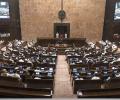
Once more women assume leadership roles and join the nation-building process, he said, adding they will become a guarantee of the country's bright future.

The provisions exempt farmers from attachment of land up to 2.5 acres and provide for prevention of hoarding and black marketing of agricultural produce.

The Indian government and opposition parties are set for a showdown in Parliament over a Constitution amendment bill concerning the implementation of the women's quota law and the delimitation exercise. The Opposition is concerned about the potential impact of delimitation on the political representation of southern states.
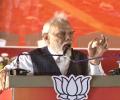
West Bengal Chief Minister Mamata Banerjee has accused the BJP-led central government of using the proposed amendment to the women's quota law as a front for the Delimitation Bill, which she claims will divide the country. She asserted that her party will fight this move at every step.

Rajya Sabha on Tuesday passed a bill to regulate the appointment and service terms of Chief Election Commissioner and election commissioners incorporating key amendments like retaining their status at par with Supreme Court judges, upgrading the search committee and inserting a new clause to protect them from court cases while discharging their official duties.

Sonia Gandhi criticises the government's proposed delimitation, claiming it's a politically motivated move to delay the caste census and gain an unfair advantage, rather than genuinely promoting women's reservation.
